
Last updated November 25, 2026
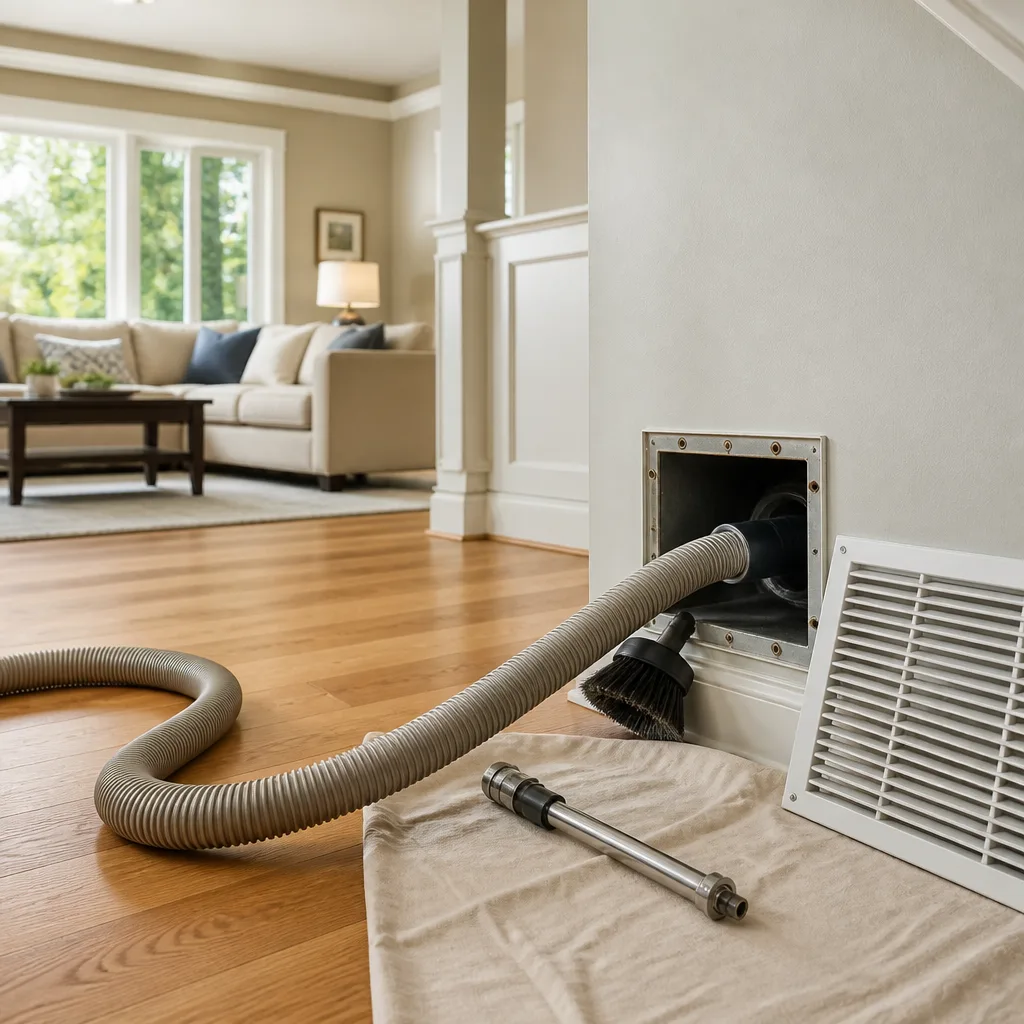 Whole-home duct cleaning
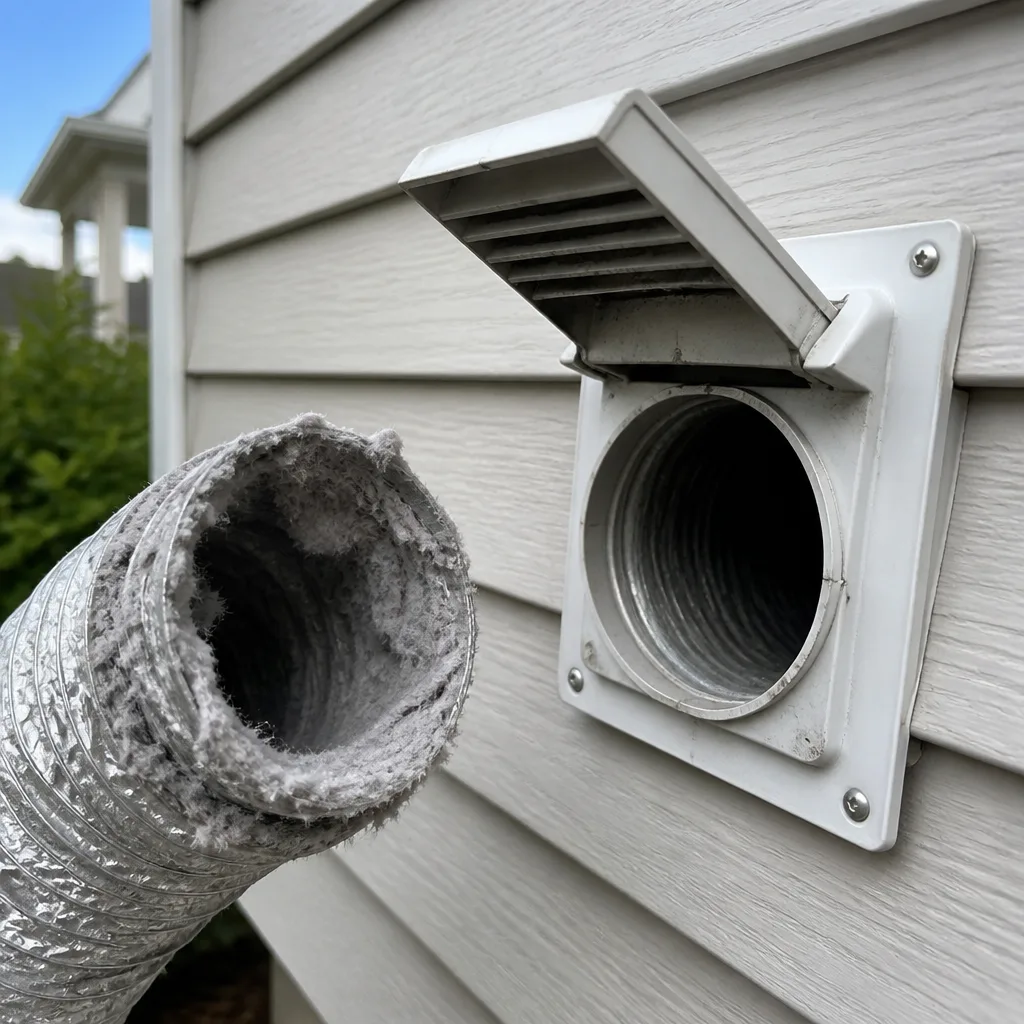 Dryer vent cleaning
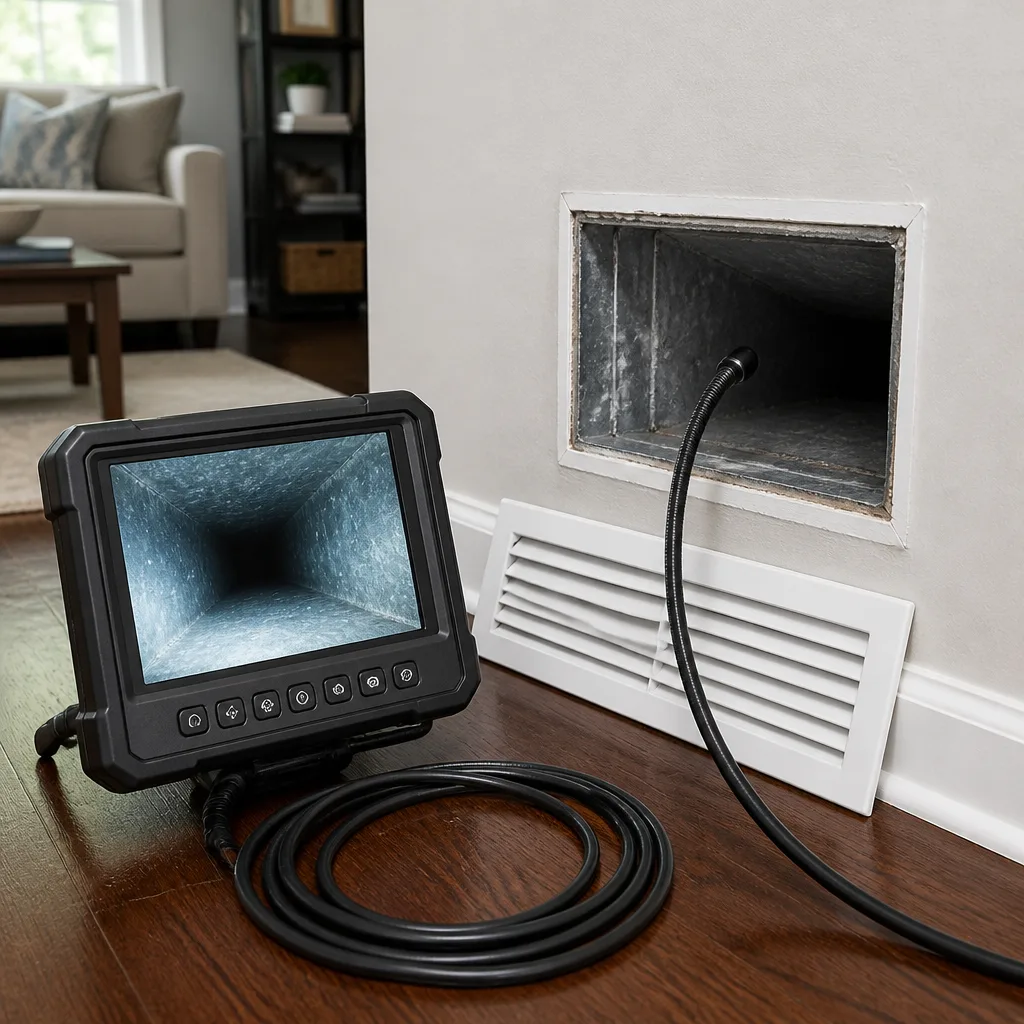 Camera inspection
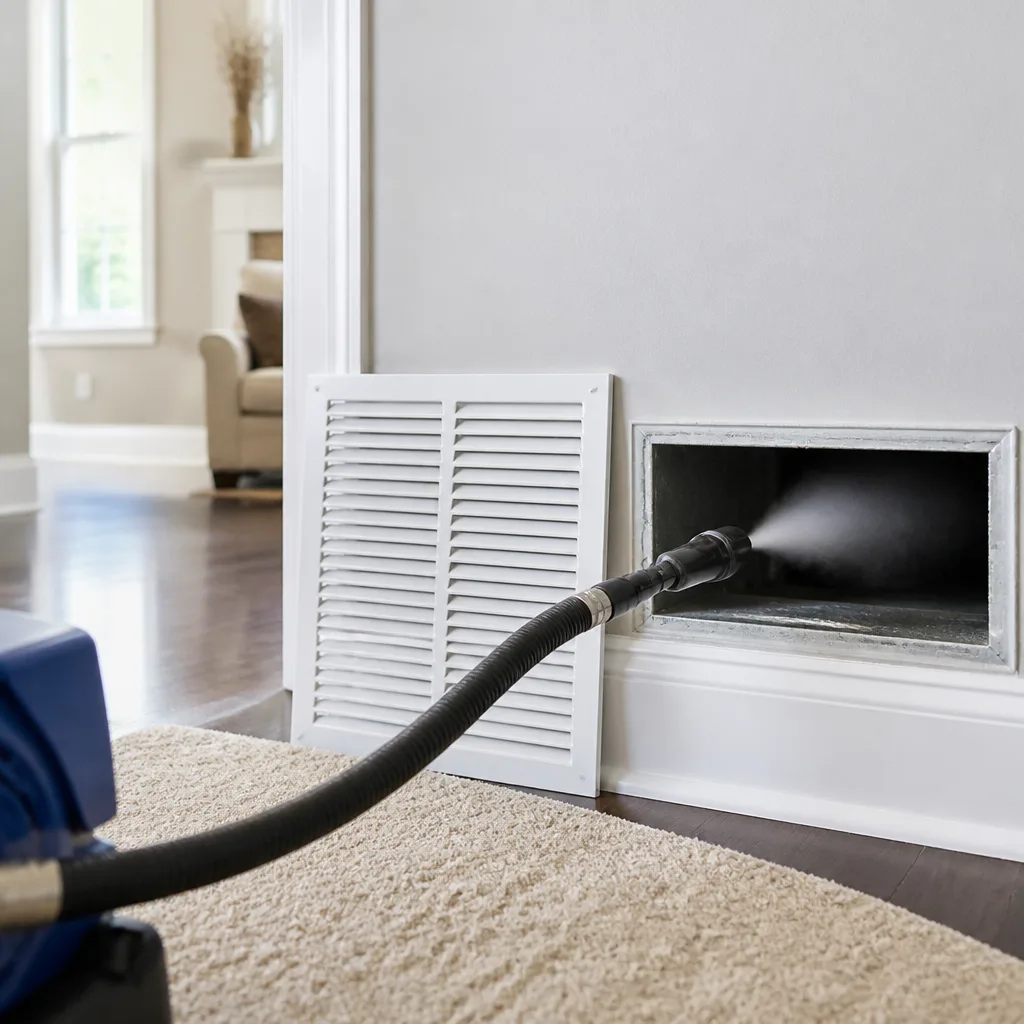 Sanitizing & deodorizing
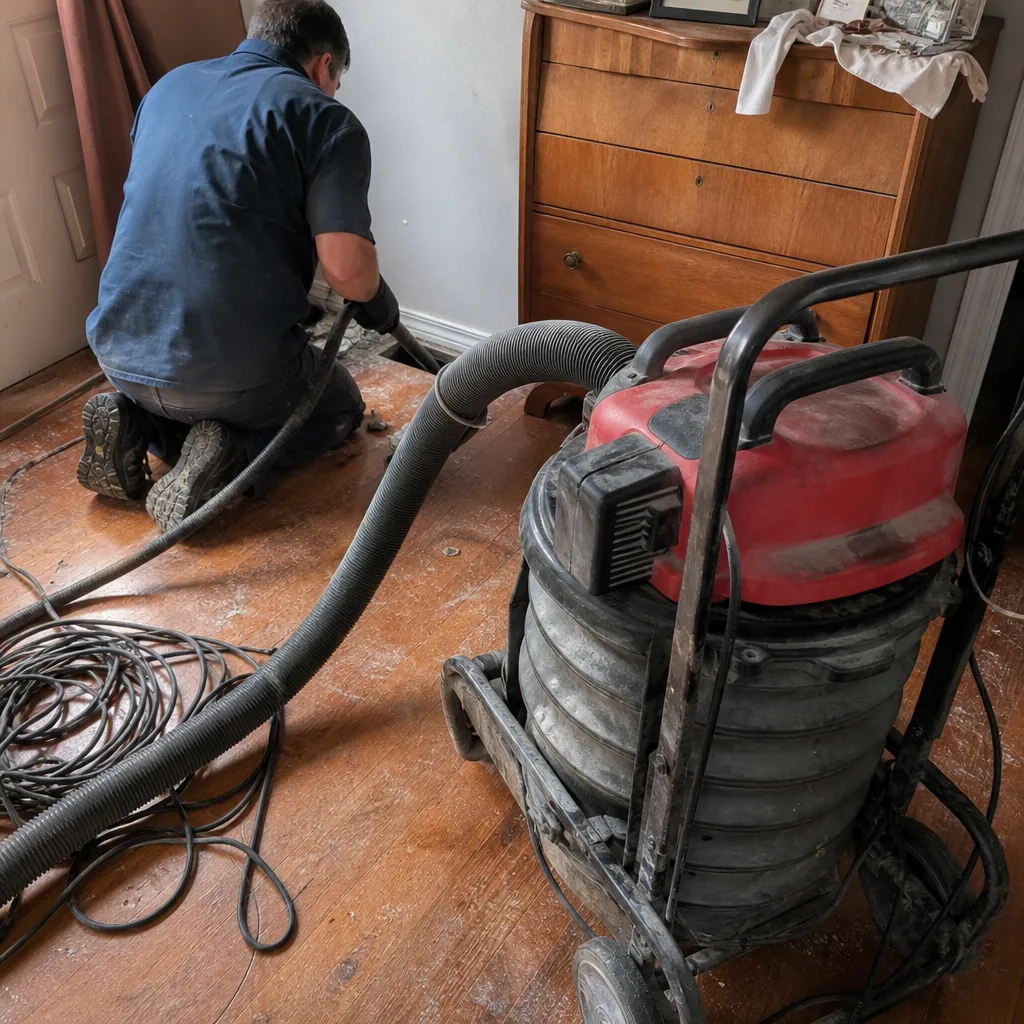
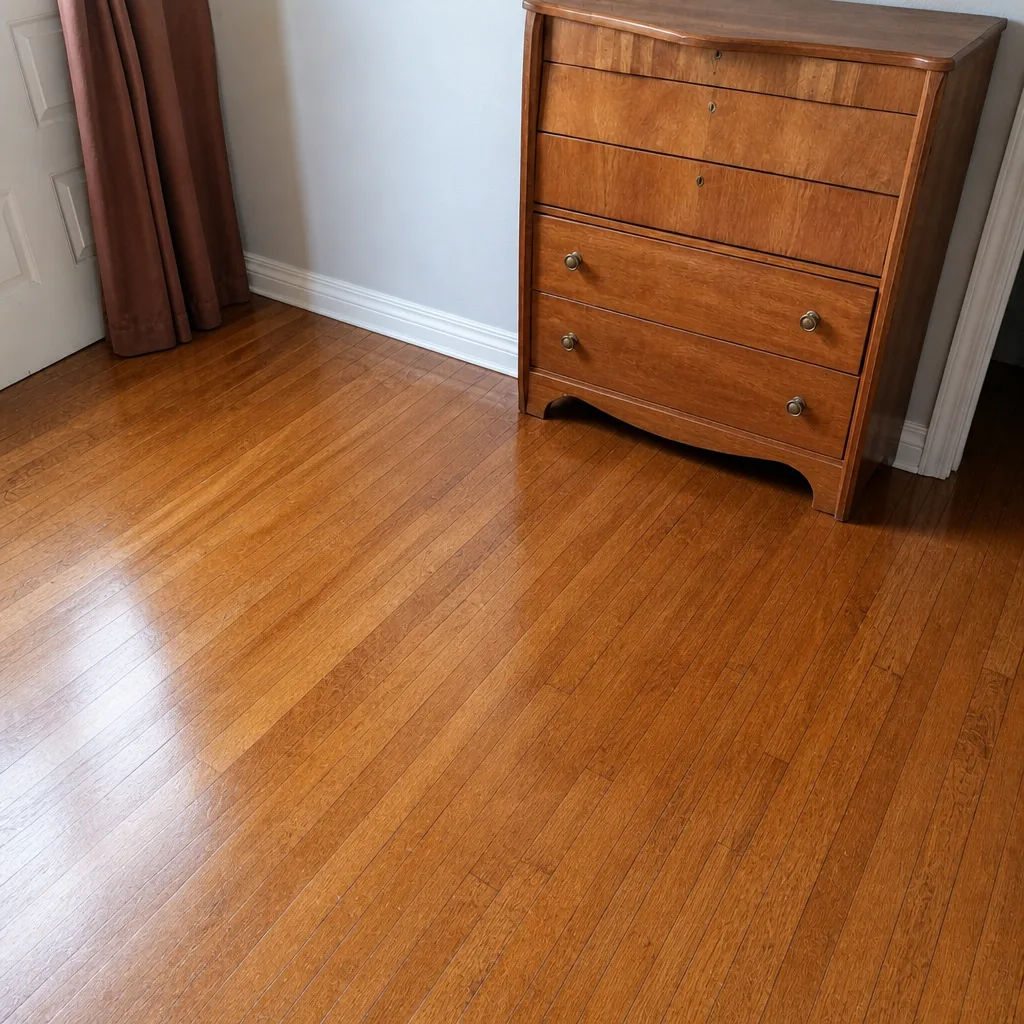
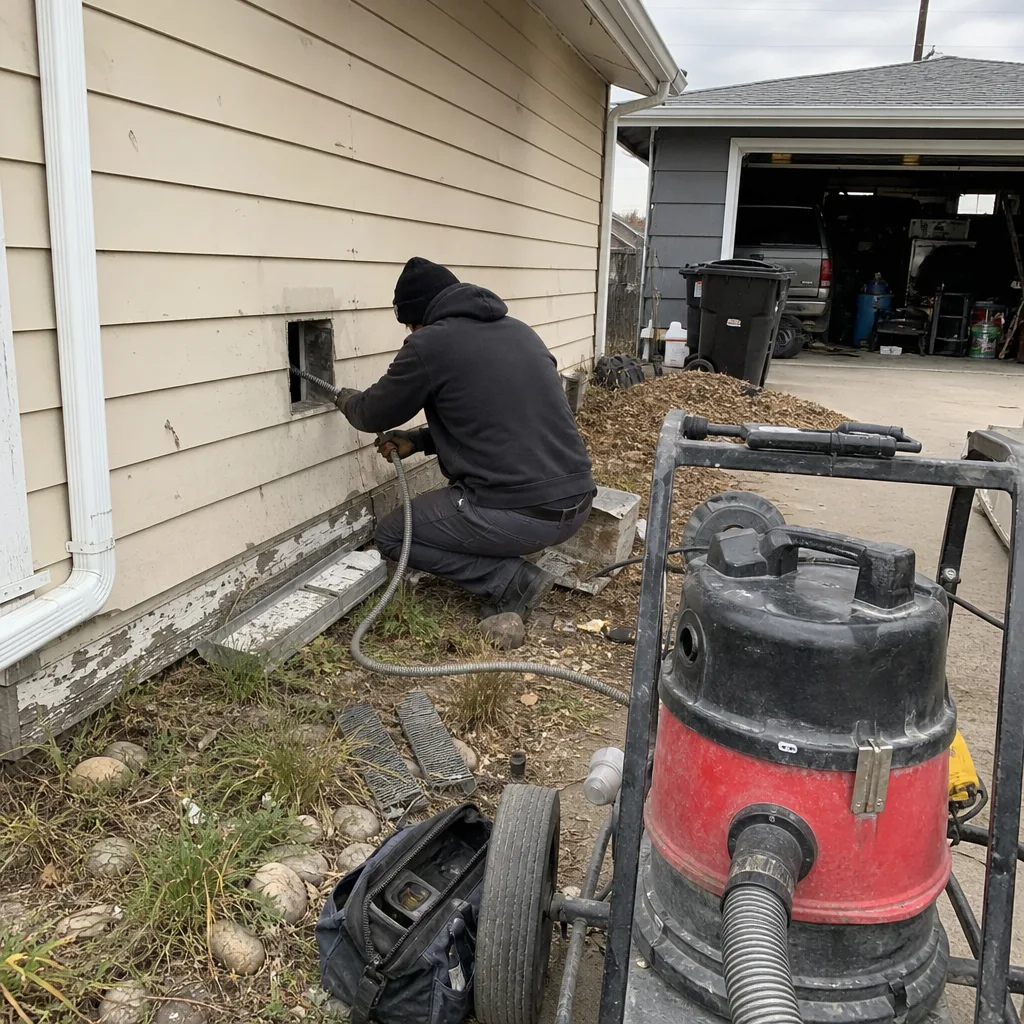
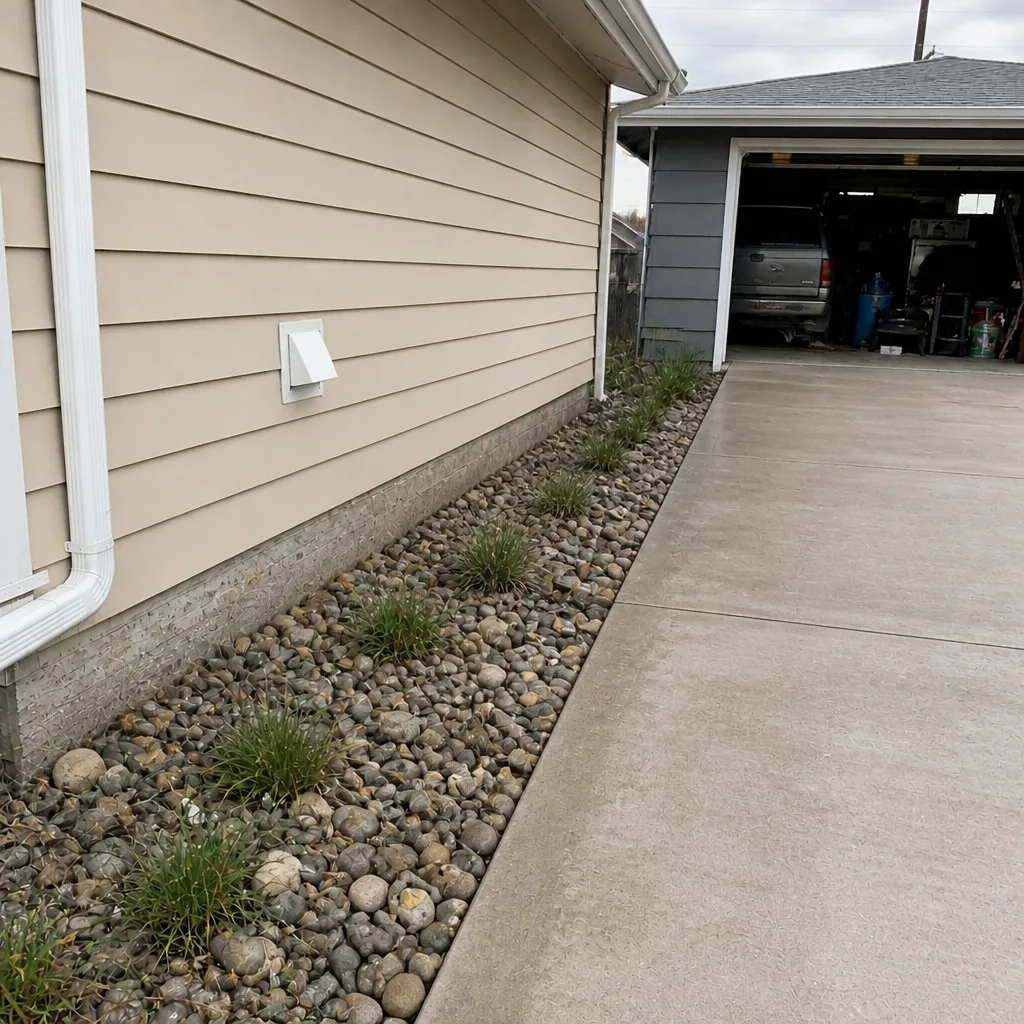
Whole-system duct and dryer vent check with before-and-after photos - you see exactly what came out of your vents
That "$99 whole-house special" is a bait ad - the real number appears once they are in your hallway, or the "clean" is a shop-vac at the register. We photograph the inside of your ducts before and after instead.
How to Hire an Air Duct Cleaning Contractor in Wheat Ridge: A Step-by-Step Guide
Colorado has no state license specifically for duct cleaning. The barrier to entry is essentially a van, a shop vac, and a website, and nothing on a homepage tells you whether a contractor follows NADCA standards or just claims to. That’s the uncomfortable truth behind this whole category. A polished site and a low quote tell you almost nothing about whether the crew that shows up can actually pull debris out of a trunk line or reach the far end of a branch run. What this guide gives you is a process, not a pitch: the exact equipment questions to ask before you book, which third-party benchmarks are worth verifying, the red flags hidden in a quote, and how to compare two estimates that were written for two different scopes. It’s written from Wheat Ridge, for Wheat Ridge homeowners and property managers who’d rather interview a contractor than gamble on one.
Quick Answer
To hire an air duct cleaning contractor in Wheat Ridge, verify three things before you book: that they follow the NADCA ACR standard and can show the equipment to do it (negative-pressure vacuum with a real CFM rating, mechanical agitation tools, camera inspection), that they’ll walk your system before quoting rather than pricing per vent over the phone, and that they’ll put a written scope of work in front of you before any work starts. The cheapest per-vent quote is almost never the full-system job, and the questions below expose that gap quickly.
Styles & brands we work with
- Whole-home duct cleaning
- Dryer vent cleaning
- Camera inspection
- Sanitizing & deodorizing
Table of Contents
- Why Vetting Matters More in Colorado Than You’d Think
- The Equipment Questions to Ask Before You Book
- NADCA, the ACR Standard, and What’s Actually Verifiable
- Red Flags in the Quote Process
- What a Legitimate Scope of Work Should Include
- How to Compare Quotes Apples-to-Apples
- What’s Specific to Wheat Ridge Homes and Climate
- Why Camera Inspection Separates Capable Contractors from Sales Performers
Why Vetting Matters More in Colorado Than You’d Think
Here’s the part most homeowners don’t know going in. Duct cleaning is a trade with no dedicated state license in Colorado, so there’s no single database to look up whether the person at your door is qualified. A general contractor’s license or an HVAC license doesn’t automatically cover duct cleaning either. That means the burden of verification lands on you, and the only real evidence is what the contractor can demonstrate about equipment and method.
That’s not a reason to be cynical about the whole category. It’s a reason to interview instead of shopping on price. We’ve seen how the capable operators in this market work, and their answers to the questions in this guide sound completely different from a sales script. The ones who can describe their vacuum’s airflow, name their agitation tools, and explain how they handle a crushed flex run are the ones who’ll do the job the ACR standard describes.
A few things you can check regardless of licensing:
- Business registration with the Colorado Secretary of State. It confirms the entity exists, not that it’s qualified, but a contractor who can’t produce a registered business name is a stop sign.
- Liability insurance and workers’ compensation. Ask for a certificate of insurance and actually read the dates and coverage limits. A company working inside your home without liability coverage is a risk you’re carrying.
- NADCA membership, which we’ll get into in a moment. It’s voluntary, which is exactly why it means something.
- Written scope of work. If they won’t commit to a written scope, everything else is verbal and unenforceable.
None of this requires technical knowledge on your part. It requires that you ask, and that you’re comfortable walking away when the answer is vague. A contractor who does this work well is used to the questions and answers them plainly.
The Equipment Questions to Ask Before You Book
Equipment is where the real difference between contractors shows up, and it’s the thing the average homeowner is least equipped to evaluate. So here are the questions to ask, in plain language, and what a good answer sounds like.
Question 1: What’s your negative-pressure vacuum rated at, in CFM?
Duct cleaning works on negative pressure: you put the whole system under suction so loosened debris travels toward the vacuum instead of into your living room. A vacuum’s airflow capacity, measured in cubic feet per minute, or CFM, determines whether that actually happens across a full residential system. A consumer-grade shop vac doesn’t produce the airflow to pull a trunk line into negative pressure. Professional units do, and a contractor should be able to tell you their equipment’s rating without hesitating. If the answer is “it’s a big one,” that’s not an answer.
Question 2: What agitation tools do you carry?
Suction alone doesn’t dislodge caked dust from duct walls, which is why the ACR standard requires mechanical agitation alongside the vacuum. Ask what tools they bring. A capable contractor will mention a combination of air whips or skipper balls for flexible duct, rotary brushes for rigid trunk lines, and hand tools for tight branches. Systems like Rotobrush and Nikro are built specifically for this, and contractors who use them tend to describe the tool by name because it matters to the work. A crew that shows up with only a vacuum and a hose is removing what’s loose and leaving what’s stuck.
Question 3: Do you do camera inspection, and can I see the footage?
Camera inspection is the single most useful verification tool in this trade. It lets the contractor see the inside of the ductwork before and after, which makes the before-and-after claim visible instead of verbal. Ask whether they camera-inspect, and whether you can see the footage of your own system. A contractor confident in their work will show you. This is also how you catch problems suction can’t fix: disconnected runs, crushed flex, gaps at joints, microbial growth in a wet section.
Question 4: What filtration are you running?
The vacuum should exhaust through HEPA-level filtration so fine particulate doesn’t get pushed back into your home’s air. Abatement Technologies units are built to that HEPA standard, which is the kind of equipment used in remediation and industrial settings. If a contractor can’t tell you their filtration setup, that’s a gap in either their equipment or their understanding of it.
NADCA, the ACR Standard, and What’s Actually Verifiable
Two third-party benchmarks are worth knowing: NADCA membership and compliance with the ACR standard. They’re related, and they’re the closest thing this industry has to a credential.
The ACR standard is the assessment, cleaning, and restoration standard published by NADCA, the National Air Duct Cleaners Association. It lays out what a proper duct cleaning actually consists of: source removal rather than chemical fogging, mechanical agitation under negative pressure, protection of the HVAC system, and post-cleaning verification. It’s the document that separates “we blew some air around” from an actual cleaning.
NADCA membership is voluntary, which is precisely why it carries weight. A contractor who joins and stays in good standing has opted into a standard that no state in Colorado requires them to meet. You can verify membership through NADCA directly rather than trusting a logo on a website.
What to verify, in order:
- Ask for the contractor’s NADCA membership status and check it through the association’s own directory, not the contractor’s marketing material.
- Ask them to describe how they follow the ACR standard on a typical job. A member should be able to walk you through source removal, agitation, negative pressure, and verification without reading from a script.
- Ask whether they do a pre-job assessment per the standard, which includes identifying problem areas and documenting system condition before cleaning.
- Ask about post-cleaning verification, including camera or visual confirmation that the work is complete.
If a contractor isn’t a NADCA member, that isn’t automatically a disqualifier, but it does mean you need to verify capability through the equipment and scope questions instead. What you shouldn’t accept is a contractor claiming to “follow NADCA standards” with no membership and no ability to describe the standard’s actual requirements.
Red Flags in the Quote Process
The quote process is where the industry’s worst habits show up, and they’re consistent enough to recognize from a phone call. Watch for these.
Per-vent pricing
Per-vent pricing is the most common bait-and-switch structure in duct cleaning. It sounds transparent – one price per vent – but it rewards the contractor for counting vents, not for cleaning the system. It also makes the initial number look small. The real cost is determined once the technician is on site and starts finding “problems” that weren’t in the quote. A whole-system price agreed before work starts is the alternative you want.
Unusually low flat rates
A flat rate that’s dramatically lower than every other quote in a Wheat Ridge market deserves a question, not a booking. Ask what’s included. Often the low number covers a surface vacuum of a few accessible vents and nothing else: no trunk line, no branch runs, no agitation, no camera. The gap between that and a full-system job is the actual work you thought you were buying.
Refusal to do a pre-job walkthrough
A contractor who won’t walk the system before quoting is pricing blind or pricing to bait. A legitimate scope starts with an assessment: looking at the furnace and air handler, checking accessible duct runs, identifying problems like disconnected flex or crushed sections, and documenting condition. If they won’t do that before quoting, the quote isn’t information.
Pricing by phone with no questions asked
Giving you a firm number over the phone for a system nobody has seen is a sign they’re quoting a template, not your system. A range with caveats is fine. A firm number with no assessment is a red flag.
Pressure to book on the first call
Urgency language on a scheduled job – “this pricing is only good today” – is a sales tactic, not a real deadline. Duct cleaning is a scheduled service. There’s no physical reason a quote expires this afternoon.
What a Legitimate Scope of Work Should Include
A written scope of work is the document that turns a verbal promise into an enforceable job. Before any work begins, you should have one in hand, and it should include the following.
- System description. What system is being cleaned: furnace and air handler, supply and return ductwork, the number of accessible runs, and the type of duct (rigid metal, flex, or a mix).
- Cleaning method. Source removal under negative pressure, the agitation tools being used, and the vacuum and filtration being run. If they use HEPA-level filtration, it should be named.
- Scope boundaries. Which portions of the system are included and which aren’t, and why. If a run is inaccessible, the scope should say so and describe what happens next.
- Repair and sealing findings. Any defects the pre-job assessment found: disconnected joints, crushed flex, gaps at the plenum, or wet sections. Cleaning a system with gaps just sends debris back into the space, so these matter to the scope.
- Post-cleaning verification. Camera inspection, before-and-after photographs of your own system, or another documented method of showing the work was done.
- Price. One flat price for the stated scope, agreed before work starts, with the written estimate setting the final price.
- Sanitizing, if wanted. Whether an air quality sanitizing step is included or optional, and what product is used. Products from names like Honeywell and Aprilaire are part of whole-home air quality work, so a contractor who knows them can tell you exactly what’s being applied and why.
- Dryer vent, if applicable. Dryer vent cleaning is a core service and a separate fire-safety concern. If your dryer vent is on the scope, it should be listed separately with its own description.
If a contractor’s written scope reads like a coupon rather than a job description, that’s your answer about how they work.
How to Compare Quotes Apples-to-Apples
Comparing duct cleaning quotes is hard because contractors quote different scopes and call them the same thing. The framework below lines them up.
- Normalize the scope. Put each quote on the same page: system covered (supply and return? trunk and branches? furnace and air handler?), number of runs included, agitation tools, vacuum and filtration, camera inspection yes or no.
- Identify what’s missing. A quote with no camera inspection, no agitation description, and no furnace cleaning is a smaller scope. Note the gaps before comparing prices.
- Check how the price is structured. Per-vent, per-run, and flat-rate quotes aren’t comparable. Convert everything to a whole-system price for the stated scope.
- Ask about repairs. If the quote doesn’t mention duct repair and sealing, ask whether the assessment includes checking for disconnected or crushed runs. Cleaning without sealing leaves the root cause in place.
- Compare verification. Before-and-after photos and camera footage are the only real proof the work was done as scoped. Weight quotes that include them more heavily.
- Read the fine print. Any line that says “additional charges may apply” without a stated scope is a placeholder for a bigger invoice later.
When you’ve done this, the cheapest quote usually reveals itself as the smallest scope. And the most expensive quote isn’t automatically the best, either. The right one is the quote that clearly describes a full-system job and commits to a flat price for it.
What’s Specific to Wheat Ridge Homes and Climate
Ductwork in Wheat Ridge lives with a particular set of conditions, and they shape what a cleaning actually involves.
The Front Range climate swings hard between dry, dusty summers and cold, dry winters, with a heating season that runs long. A furnace that cycles constantly pulls air through the ductwork for months, and the dust load across a full heating season is real. Add to that the region’s spring wind events, which send fine particulate into every gap in a home’s envelope, and return ducts in older Wheat Ridge homes often carry more debris than the homeowner expects.
Housing stock matters too. Wheat Ridge has a mix of mid-century homes and newer construction. In older homes, rigid metal ductwork is common, and so are the problems that come with it: taped or mastic joints that have dried and separated, sections of flex added during a later HVAC replacement, and runs that were rerouted and never properly sealed. In newer homes, flex duct dominates, and flex is easy to crush or kink during installation or later remodeling. A crushed run cuts airflow and traps debris in a way that cleaning alone won’t fix. That’s why Wheat Ridge Air Duct Cleaning treats duct repair and sealing as part of the work rather than a separate call.
Post-renovation contamination is another one locals ask about. Drywall dust and construction debris that entered the return system during a remodel can sit in the ductwork long after the work is finished, and it has to be removed at the source rather than filtered out.
Why Camera Inspection Separates Capable Contractors from Sales Performers
Camera inspection is the test that exposes the difference between a contractor who can do the work and one who can only sell it. Any company can promise a thorough cleaning. Only a company with the equipment and the willingness can show you the inside of your own ductwork before and after.
Here’s why it matters so much. Ductwork is hidden, and that’s the whole problem with vetting this trade. A contractor can run a vacuum and declare the job done, and you have no way to know what was reached or what was missed. Camera inspection changes that. It shows the debris load in the trunk line before cleaning, the condition of the joints, whether a flex run is crushed, and whether the surface is actually clean afterward. It also surfaces repair needs that suction won’t solve: gaps at the plenum, disconnected branches, and wet sections that need attention before they become a bigger problem.
When you ask about camera inspection, ask two things: whether they carry a camera, and whether you can see the footage of your own system. A contractor who’s confident in the work will say yes to both. Watch for a middle answer, like “we inspect if we find a problem” or “we photograph the vents.” Those aren’t the same thing as documenting the inside of the system.
In our experience, the contractors who lead with camera inspection are the ones who also do repair and sealing, because they’re the ones who see what the ducts actually look like. That’s a useful signal to carry into the interview.
Common Mistakes to Avoid
- Booking on price alone. The lowest quote in a Wheat Ridge market is often a smaller scope dressed up as a full-system job. Compare scope before price, every time.
- Accepting per-vent pricing. Per-vent pricing rewards counting vents, not cleaning the system, and it’s the structure most often used for bait-and-switch. Insist on a whole-system flat price.
- Skipping the pre-job walkthrough. A contractor who won’t assess the system before quoting is pricing blind. The assessment is where problems like crushed flex and disconnected runs get caught.
- Not asking about equipment. A shop vac and a hose can’t put a residential system under negative pressure. Ask for the CFM rating and the agitation tools.
- Assuming a license covers it. Colorado has no duct cleaning license, so a general contractor’s license isn’t evidence of capability. Verify through NADCA and the equipment questions.
- Letting the quote stand in for a scope of work. A price with no written description of what’s included isn’t a scope. Get the description before you book.
- Ignoring the dryer vent. Dryer vents are a leading cause of residential fires, and they’re often overlooked when a duct-only contractor does the work. Make sure it’s on the scope if it needs doing.
- Cleaning without sealing. If the assessment finds gaps or disconnected runs, cleaning without repairing them leaves the root cause in place. The air duct cleaning scope should call out repair needs expressly.
See the difference
 Before
 After
 Before
 After
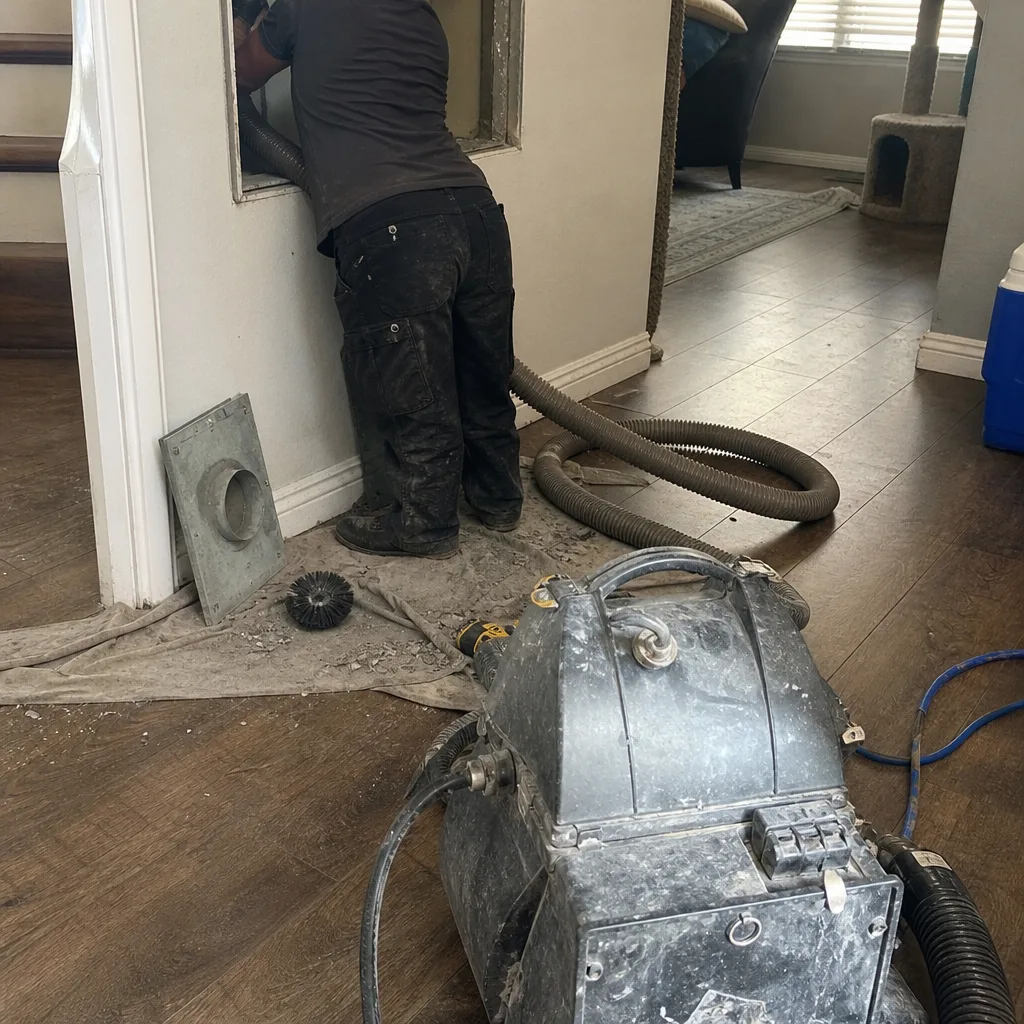 Before
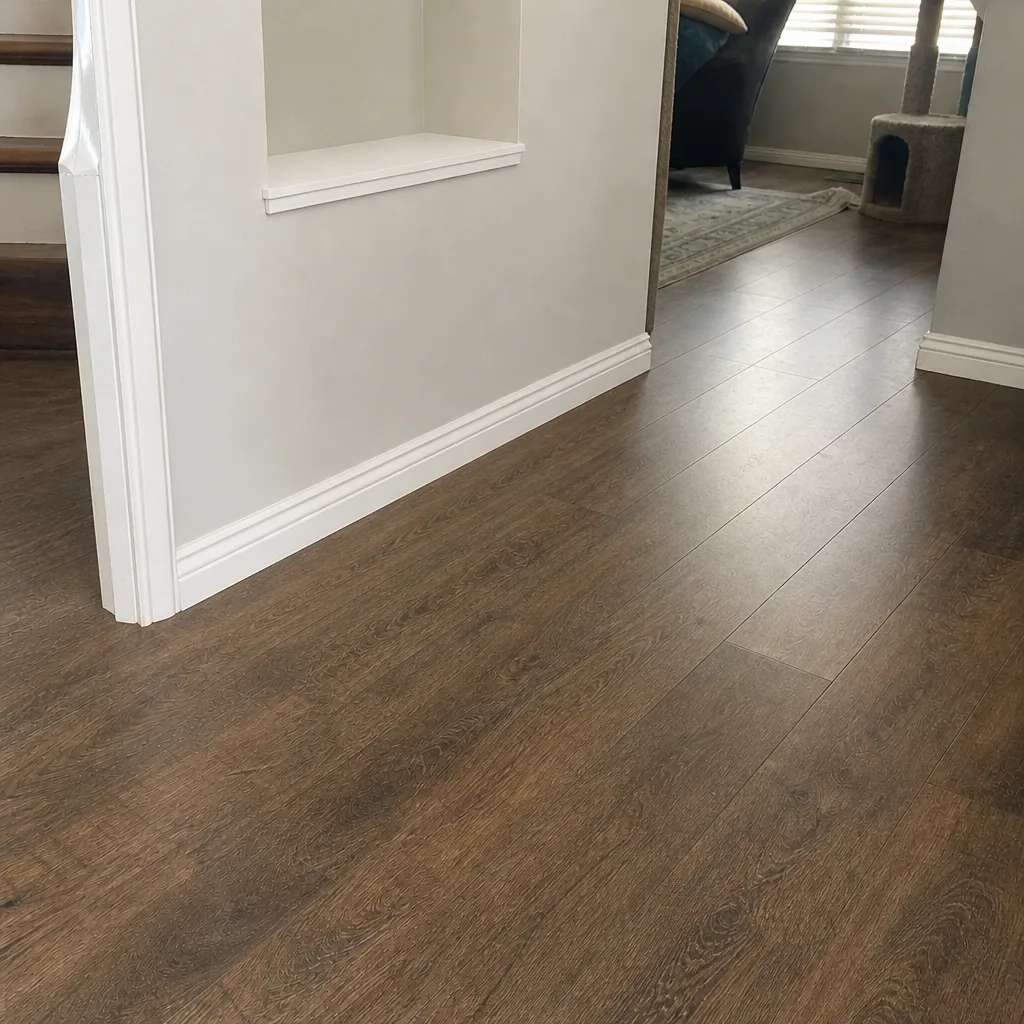 After
When to Call a Professional
Some signs point clearly to professional attention: visible dust streaking at the supply registers, a musty smell when the furnace comes on, a recent renovation that sent drywall dust into the return system, or a dryer that takes noticeably longer to dry a load. If a previous cleaning was done without camera inspection, it’s worth having the system assessed, because there’s no record of what was actually reached.
There’s also the case of the contractor whose answers don’t hold up. If the equipment questions go unanswered, the scope of work is vague, or the quote is per-vent with no assessment, that’s a reason to call a contractor who can answer those questions. We answer 24/7. Call (855) 550-7950 for a free estimate, with fast dispatch from 7am to 7pm, Sunday through Friday.
Frequently Asked Questions
Duct cleaning in Wheat Ridge is priced per job by a written estimate, not by a per-vent rate, because the cost depends on the size of the system, the number of accessible runs, the condition of the ductwork, and whether repair or sealing is needed. That’s why a whole-system range from a contractor who’s walked your system is the only number worth comparing. Call (855) 550-7950 for an exact quote – estimates are free.
No. Colorado has no state license specifically for duct cleaning, which is why NADCA membership and ACR standard compliance are the most meaningful third-party benchmarks to verify. Ask for membership status and check it through NADCA’s directory rather than relying on a logo on a website. Call (855) 550-7950 if you’d like to talk through what to ask before booking.
Ask for before-and-after photographs of your own ducts and, ideally, camera footage of the inside of the system. Those are the only real proof that cleaning reached the trunk line and branch runs, not just the accessible vents. A contractor confident in the work will show you without being asked twice. Call (855) 550-7950 for an estimate that includes verification.
There’s no universal schedule, and any contractor who quotes one without assessing the system is guessing. The right interval depends on how much dust your household generates, whether pets live in the home, recent renovations, and the condition of the ductwork itself. An assessment and camera inspection tell you what your system actually needs. Call (855) 550-7950 to have your system looked at.
Duct cleaning focuses on the ductwork, while HVAC cleaning covers the furnace, air handler, coils, and the components that move air through the system. They’re related and often done together, since debris in the furnace and air handler ends up back in the ducts. A contractor who handles both in one scope saves you a second visit. Call (855) 550-7950 for a free estimate on either.
Dryer vent cleaning is a separate fire-safety concern and is worth doing whenever the vent shows lint buildup or a dryer takes longer to dry a load. It’s often overlooked by duct-only contractors, which is why it’s worth asking about expressly. Dryer vent cleaning can be added to the scope without a second call. Call (855) 550-7950 to have it included in your estimate.
The Bottom Line
Vetting a duct cleaning contractor in Wheat Ridge comes down to a handful of questions asked in the right order. Verify NADCA membership and ACR standard compliance. Ask for the vacuum’s CFM rating, the agitation tools, and camera inspection. Insist on a pre-job walkthrough and a written scope of work before any work starts, and a flat whole-system price rather than a per-vent number. Compare quotes by normalizing scope, not by lining up prices. The contractor who can answer all of that with specifics is the one who’ll do the job the standard describes. The one who can’t is a sales pitch with a van.
Written by the team at Wheat Ridge Air Duct Cleaning.
We answer 24/7. Call (855) 550-7950 for a free estimate, with fast dispatch from 7am to 7pm, Sunday through Friday.