
Last updated November 25, 2026
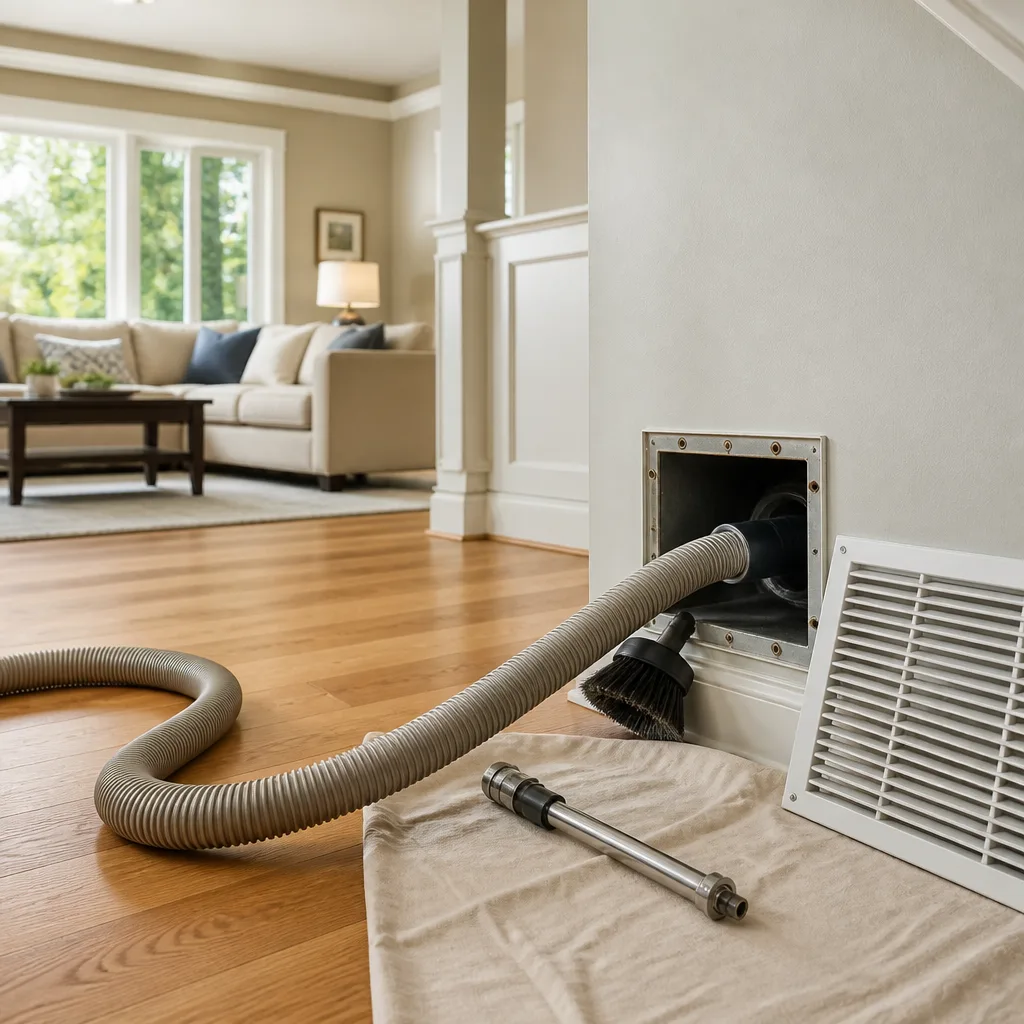 Whole-home duct cleaning
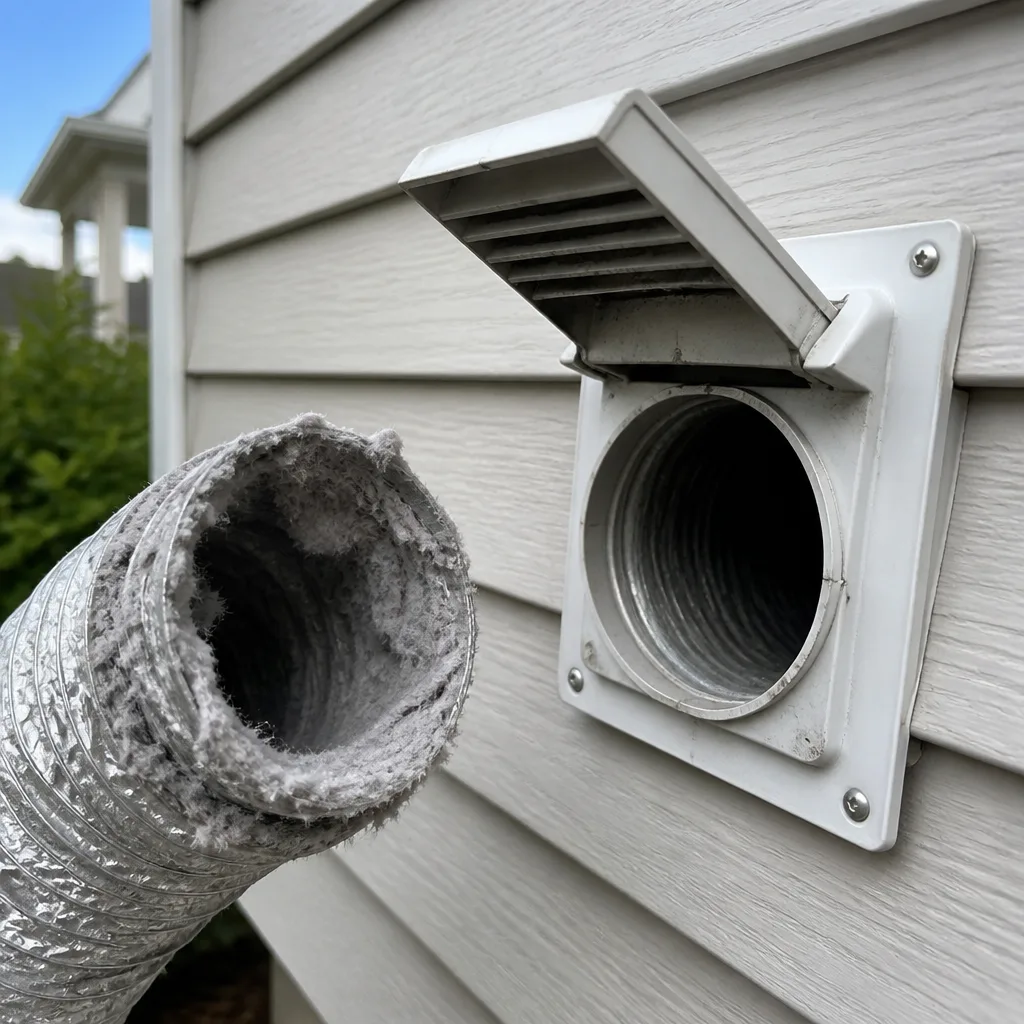 Dryer vent cleaning
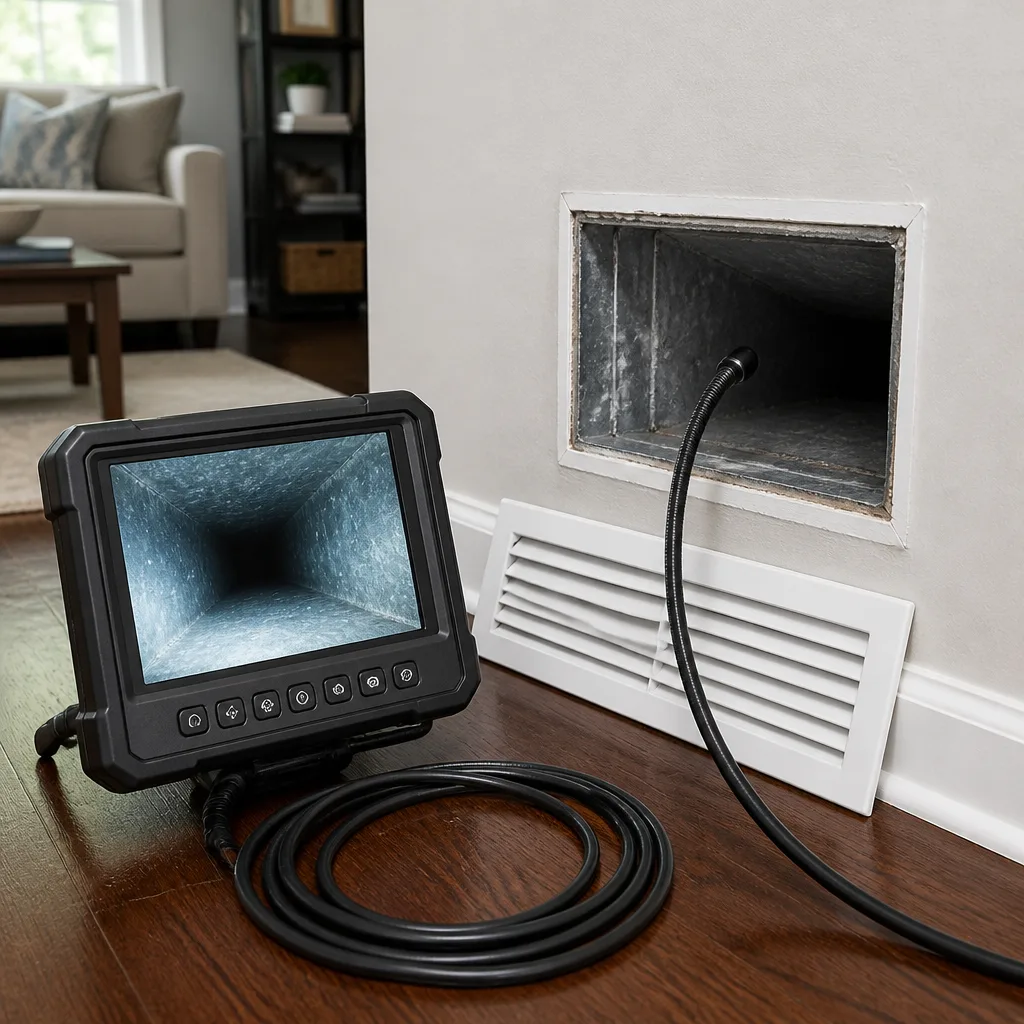 Camera inspection
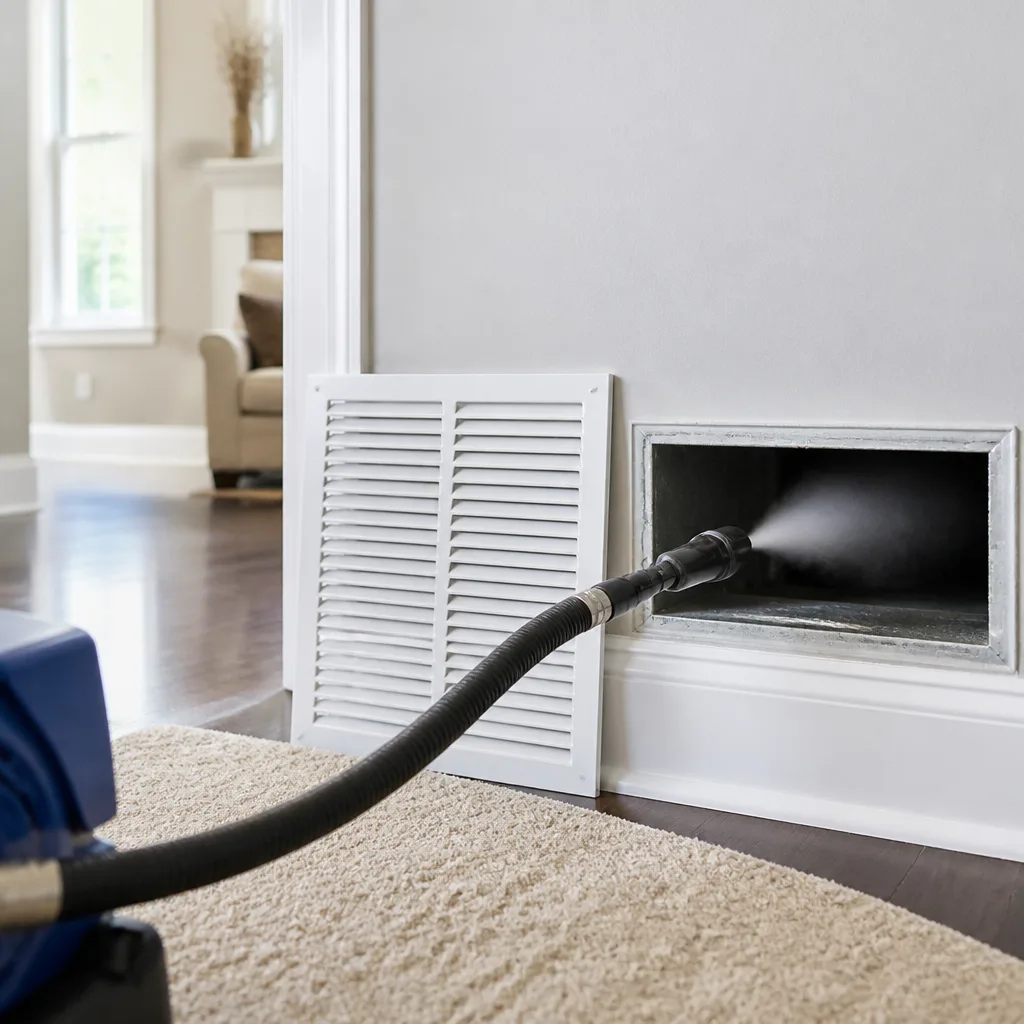 Sanitizing & deodorizing
Whole-system duct and dryer vent check with before-and-after photos - you see exactly what came out of your vents
That "$99 whole-house special" is a bait ad - the real number appears once they are in your hallway, or the "clean" is a shop-vac at the register. We photograph the inside of your ducts before and after instead.
Air Duct Cleaning Maintenance Checklist for Wheat Ridge Homeowners
Most homeowners treat duct maintenance as a filter problem. Change the filter, and the system is handled. That logic holds until you find out the filter never had a chance to catch anything, because a flex run behind the drywall came loose two winters ago and has been dumping conditioned air into a joist bay ever since. A duct system doesn’t fail on a schedule. It degrades through compounding conditions, and most of them show up at the register long before they show up on a service invoice. This checklist gives you a concrete, observation-based routine you can actually run between professional cleanings in Wheat Ridge, built around what the system tells you when you know where to look.
Quick Answer
A workable air duct maintenance routine for a Wheat Ridge home means logging register-level observations quarterly (dust patterns, airflow balance, odor), checking the furnace and air handler for duct-system stress signals, running an immediate inspection after any trigger event like renovation or wildfire smoke, and scheduling professional cleaning on an interval calibrated to the home rather than a generic calendar. The checklist below turns each of those into a specific, repeatable task.
Styles & brands we work with
- Whole-home duct cleaning
- Dryer vent cleaning
- Camera inspection
- Sanitizing & deodorizing
Table of Contents
- Why Filter Checks Miss Most Duct Problems
- The Quarterly Register Log: What to Record and Why
- Furnace and Air Handler Signals That Point to Duct Stress
- Post-Event Checkpoints: Renovation, Pests, HVAC Replacement, Smoke
- What to Document Before You Call a Contractor
- Maintenance Intervals Calibrated to Wheat Ridge Conditions
- Beyond Cleaning: Repair, Sealing, and Air Quality
- What a Professional Cleaning Actually Covers
Why Filter Checks Miss Most Duct Problems
A filter sits at one point in the system: the return air inlet at the furnace or air handler. It catches what passes through that opening. It tells you nothing about what happens downstream. A disconnected duct joint in a crawlspace, a cracked flex run behind drywall, or a supply plenum accumulating construction debris after a basement remodel all occur past the filter, in spaces the filter can’t influence and you rarely see. Those are the findings that matter most in Wheat Ridge homes, and none of them show up on a filter-change reminder.
Here’s the distinction worth internalizing: a dirty filter is a maintenance item, but a duct system problem is an envelope problem. When a supply run separates from its boot, the system stops delivering air where it’s supposed to and starts pushing it into an unconditioned cavity. The furnace runs longer. The rooms at the end of the trunk get starved. You feel it as a comfort complaint long before you’d think to blame the ducts.
What the filter can tell you is still useful, just limited. A filter that loads up in weeks instead of months suggests the return side is pulling in more particulate than it should, which can mean a compromised return duct or an open path from a crawlspace or attic. Treat an unusually fast-loading filter as a prompt to inspect, not as the problem itself.
This is why a maintenance routine built only around filters is incomplete. The checklist in this guide is built around observation points distributed across the whole system: registers, the air handler, the return path, and the events that disturb all three. That structure is what separates a real maintenance habit from a reminder that pops up twice a year and gets dismissed.
The Quarterly Register Log: What to Record and Why
Every supply and return register in your home is a data point. Once a quarter, walk the house with a notebook or a phone and record four observations at each register. It takes fifteen minutes and it builds a baseline that makes any future change obvious. This is the single highest-value habit in the entire checklist, because patterns across registers reveal problems a single spot-check never would.
- Dust pattern. Note where dust collects: streaking out from the register face, a dark ring around the grille, or buildup on the nearby wall or ceiling. Streaking often means the register is pushing air with more velocity or turbulence than the run was designed for, or that the boot isn’t sealed to the drywall.
- Airflow. Hold a tissue or your hand at each register while the system runs. Rate the flow as strong, moderate, or weak. What matters is asymmetry: a register that was strong last quarter and is weak now is a signal, even if the absolute flow is fine.
- Odor. Note any smell at the register with the system running. Musty, dusty, or chemical odors at a specific register point to a localized issue in that run, not a whole-house problem.
- Temperature feel. Compare supply air temperature to room temperature. A register delivering noticeably cooler or warmer air than its neighbors on the same trunk suggests a leak or a long, undersized run losing its conditioned air before it arrives.
Log the date and the outdoor conditions alongside the readings. Wheat Ridge sits at altitude with a dry climate, and seasonal swings change how the system behaves. A spring log taken during a windy stretch and a fall log taken in still air aren’t directly comparable, and noting conditions keeps you from chasing phantom changes. After two or three quarters you’ll have a pattern specific to your house, which is worth more than any generic recommendation.
Furnace and Air Handler Signals That Point to Duct Stress
The furnace and air handler sit at the center of the duct system, so they register its problems first. Filter condition is only one of several indicators worth watching. The others tell you about the ductwork itself, which is what this checklist is really about.
- Blower runtime. If the system seems to run longer to reach the same temperature, the duct system may be losing air before it reaches the rooms. A leaky supply trunk in an attic or crawlspace is a common culprit in older Wheat Ridge homes.
- Short cycling. Frequent on-off cycles can indicate restricted airflow, which in turn can trace back to a collapsed flex run, a crushed duct, or debris blocking a run. Don’t assume it’s the thermostat until the ductwork has been checked.
- Debris at the supply plenum. The plenum is the box where the furnace connects to the supply trunk. Debris accumulating there, especially after a renovation, means particulate is entering the system downstream of the filter and will be distributed through the house.
- Rattling or popping at startup. Ductwork that moves or flexes when the blower starts can indicate poorly supported or partially disconnected runs. It’s worth tracing the sound to its source.
- Visible dust at the air handler cabinet seams. Dust accumulating at cabinet joints suggests the cabinet isn’t sealed, which is a duct-sealing problem, not a cleaning problem.
An important caution: the air handler cabinet, the furnace heat exchanger, and any electrical connections inside the unit are not homeowner service points. If you open a filter door to check the filter, that’s fine. If you’re reaching past the filter into the cabinet, into the blower compartment, or near wiring, stop. Those components carry real risk and belong to a trained technician. The same goes for any gas-fired furnace work. Observe from the outside; leave the internals to a professional.
Post-Event Checkpoints: Renovation, Pests, HVAC Replacement, Smoke
Duct systems don’t degrade on a clock. They degrade in response to events, and the most useful maintenance rule you can adopt is a trigger list. When one of these events happens, treat it as an immediate inspection point rather than waiting for your next scheduled cleaning.
Renovation or Demolition Work
Any project that opens walls, disturbs insulation, sands drywall, or generates sawdust sends fine particulate into the air for days. Much of it settles in the ductwork and the supply plenum. After a kitchen remodel, a basement finish, or any drywall work, run a full inspection before the next heating or cooling season. This is one of the most common post-event findings in Wheat Ridge homes, and it’s easy to miss because the renovation dust settles out of sight.
Pest Activity
Rodents and insects use duct runs and crawlspace penetrations as travel routes. Evidence of activity, droppings, nesting material, gnaw marks on flex duct, or a persistent odor at a register, means the ductwork needs inspection and likely sanitizing, not just a vacuum. Flex duct that’s been chewed through is a leak and a contamination point at once.
HVAC Replacement or Major Repair
When a furnace, air handler, or air conditioner is replaced, the connecting ductwork is disturbed at the plenum and the transition points. New equipment paired with old, unsealed ductwork often performs below its rating. Have the duct system inspected and sealed at the same time the new equipment goes in, so you’re not paying for efficiency the ducts are throwing away.
Wildfire Smoke Events
Smoke events along the Front Range push fine particulate into homes through every opening, including the duct system. After a significant smoke event, the ducts can hold odor and particulate that a filter change won’t clear. A cleaning and an air-quality sanitizing step is the appropriate response, and it’s worth doing before the next season rather than after.
What to Document Before You Call a Contractor
The most useful thing you can do before scheduling an inspection is arrive at the call with data. When a contractor starts from a documented baseline rather than from scratch, the inspection is more targeted and the recommendations are more specific to your house. Use this numbered list to prepare.
- Your register log. Bring the quarterly readings: which registers are weak, which show streaking or odor, and when each pattern started. This tells the technician where to focus.
- The equipment inventory. Record the make and model of the furnace and air handler, and note the filter size and type you use. Filter mismatch is a common cause of airflow complaints.
- A system map. Sketch a rough floor plan marking every supply and return register. If you don’t know where a return path runs, note that. Missing or undersized returns are a frequent finding.
- The event timeline. List any trigger events: renovations, pest activity, HVAC replacement, smoke events, with approximate dates. This helps the technician correlate problems to causes.
- Your comfort complaints. Note specific rooms that are too hot, too cold, or drafty, and when the complaint is worst. Room-specific complaints point to run-specific problems.
- Photos. Photograph the air handler, the plenum connection, visible ductwork in the attic or crawlspace, and any register with unusual dust or damage. Photos of inaccessible areas save inspection time.
None of this requires any technical knowledge. It’s observation and record-keeping, which any homeowner can do. The payoff is an inspection that begins with your house’s actual history instead of a generic walkthrough, and recommendations that address the real conditions rather than a standard package.
Maintenance Intervals Calibrated to Wheat Ridge Conditions
Generic advice says clean your ducts every three to five years. That range is a starting point, not a schedule for your specific house. Several conditions specific to Wheat Ridge and the surrounding Front Range shift the interval in one direction or the other.
Dry Climate and Altitude
Wheat Ridge sits at altitude in a dry climate. Low indoor humidity in winter means more airborne dust and more static-driven particulate settling into ductwork and on register faces. Homes here tend to accumulate fine dust faster than humid-climate homes, which argues for a shorter interval and a more consistent register log.
Home Construction Type
Older homes with original sheet-metal ductwork and unsealed joints lose more air and collect more debris at the joints than newer, tighter systems. Homes with flex duct added during a remodel are prone to sagging runs and disconnected joints. A house that’s had multiple renovations, or a mix of original and added ductwork, usually needs more frequent inspection than a home with a single, intact system.
Occupancy and Lifestyle
Homes with pets, allergy sufferers, or anyone with respiratory sensitivity benefit from a shorter interval. So do homes near active construction or with a lot of foot traffic. A vacant or lightly used home can stretch the interval, assuming the trigger-event checklist is still followed.
Suggested Baseline
A reasonable starting point for a Wheat Ridge home without special conditions is a professional inspection and cleaning every three to five years, with the quarterly register log running in between. Adjust shorter for pets, allergies, older ductwork, or a recent trigger event. Adjust longer only if the log shows no change across several quarters. The log is what tells you whether your interval is right for your house, which is why it’s the backbone of this checklist rather than a footnote to it.
Beyond Cleaning: Repair, Sealing, and Air Quality
Cleaning removes debris. It doesn’t fix the conditions that let debris in or let conditioned air out. If the register log shows weak airflow or a temperature gap, or the furnace signals point to leaks, the right response is repair and sealing alongside the cleaning. We seal the gaps, not just sweep the surface, because a clean but leaky duct system still wastes energy and still pulls contaminants into the house.
At the same time, it’s worth separating cleaning from air quality work. A cleaning addresses the ductwork; an air quality step addresses what’s in the air and on the surfaces of the system. These are related but distinct. For the cleaning portion, we use professional-grade mechanical equipment from Rotobrush and Nikro, and Abatement Technologies filtration for HEPA-level capture, which is a different class of tool than a consumer vacuum. For the air quality portion, familiarity with Honeywell and Aprilaire whole-home equipment lets us address filtration and humidity at the system level rather than with a single-room fix.
The practical takeaway: think of your duct system as having two jobs, delivering conditioned air and keeping the air inside the system clean. Cleaning handles the second job. Sealing and repair handle the first. A maintenance routine that only addresses one of them leaves the other to degrade. If your register log is pointing at airflow problems, the repair and sealing side is where the value is, and it’s worth talking through before another cleaning.
What a Professional Cleaning Actually Covers
It helps to know what a proper cleaning includes so you can tell a real job from a superficial one. A professional cleaning should cover the supply and return ductwork, the registers, the air handler, and the plenum, with negative pressure and HEPA filtration so dislodged debris is captured rather than redistributed. Ask what equipment is used and how the system is brought under negative pressure before cleaning starts.
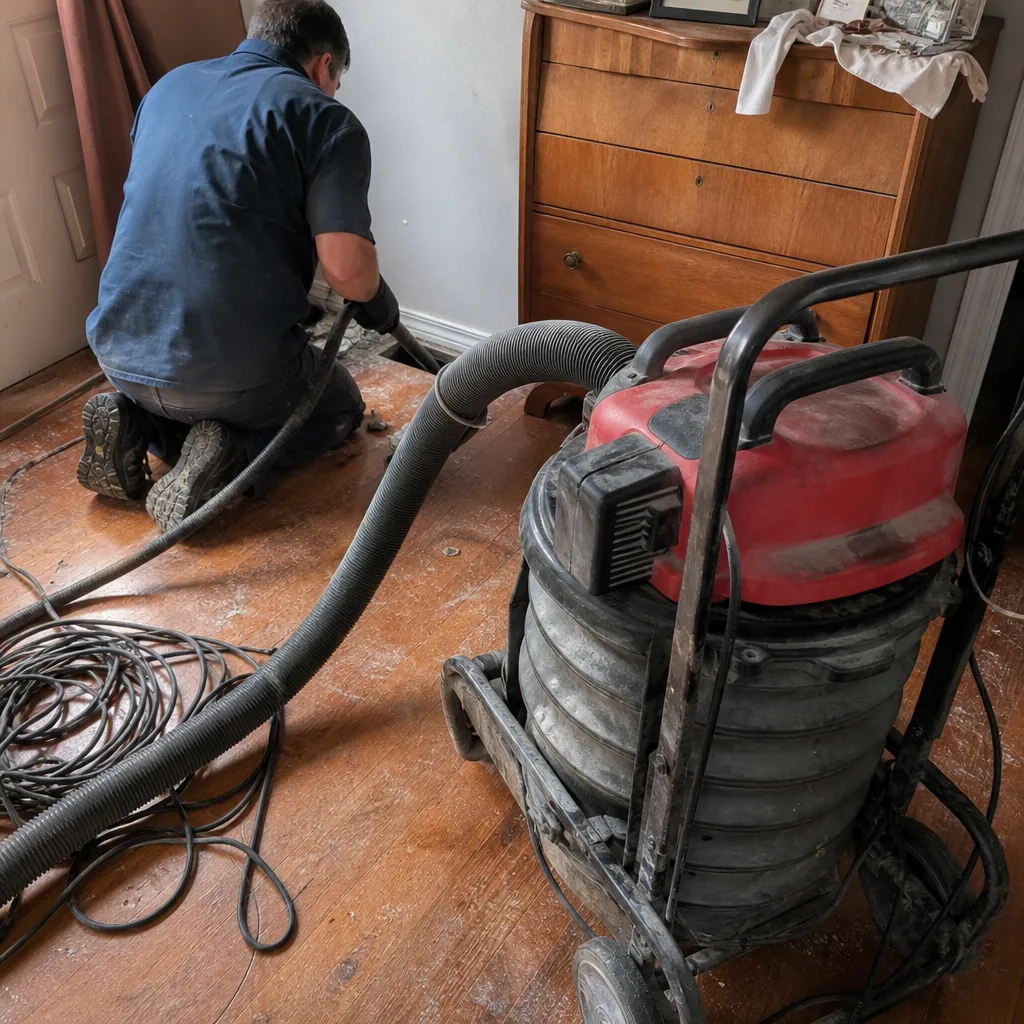
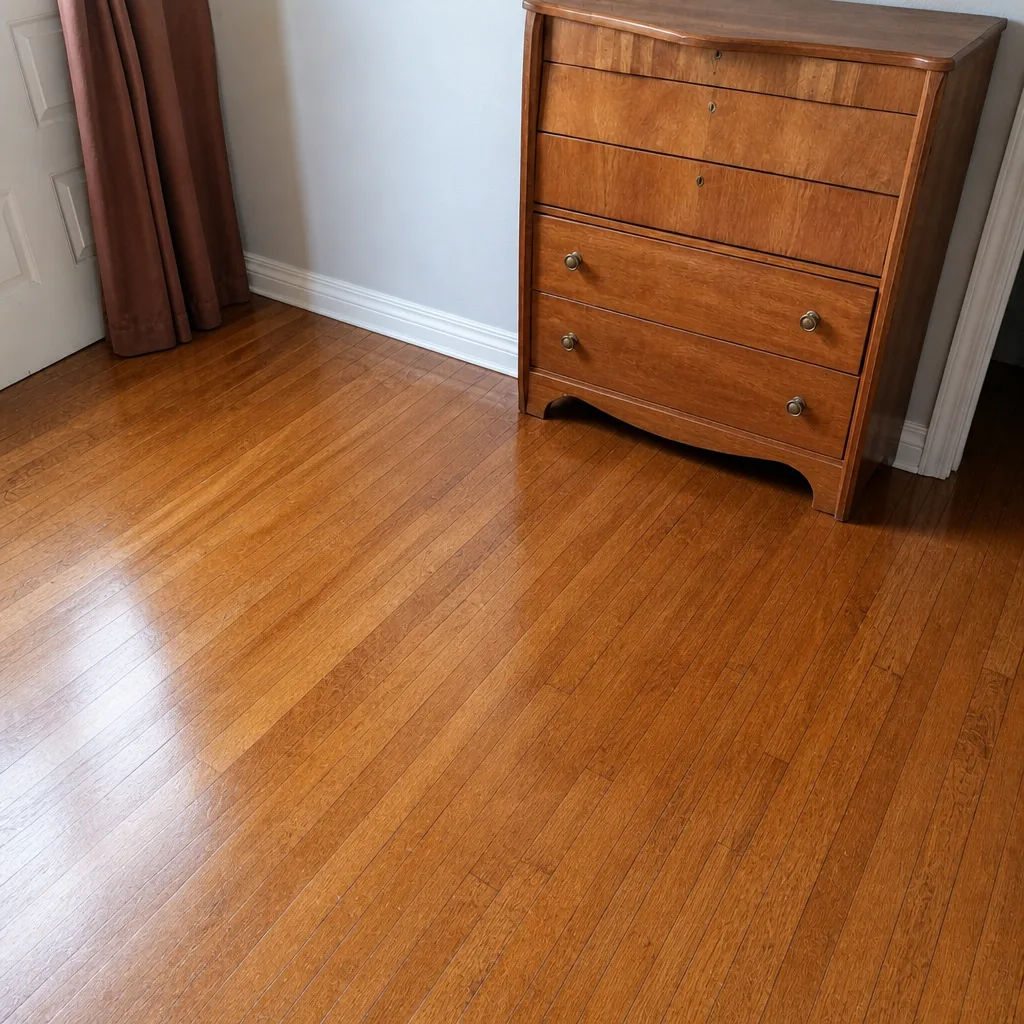
For a Wheat Ridge home, the cleaning should also account for the specific conditions this guide has walked through: a post-renovation supply plenum, a crawlspace run that may have separated, flex duct that may have sagged. The register log you’ve kept makes those issues visible to the technician before the job begins. It also means you can ask for before-and-after photos of your own ducts, which is the way to confirm the work was actually done rather than just billed.
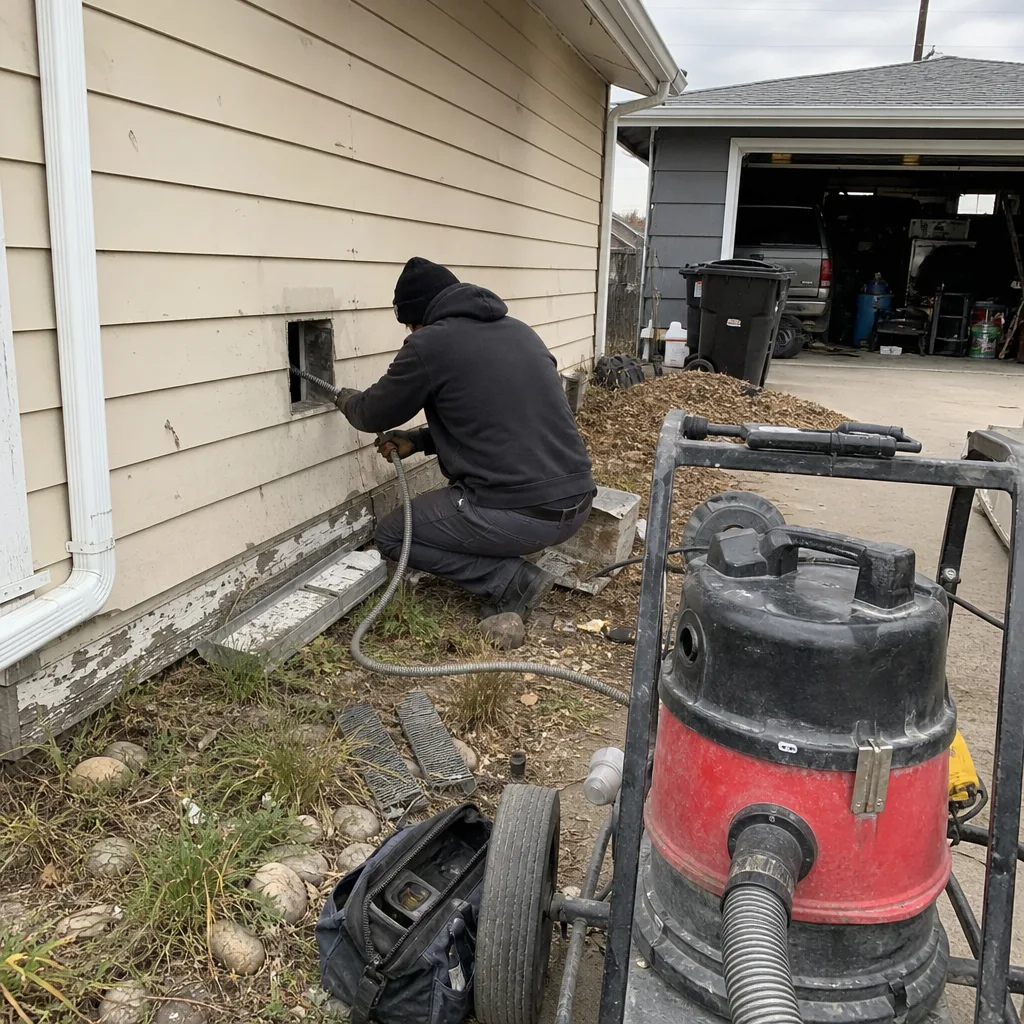
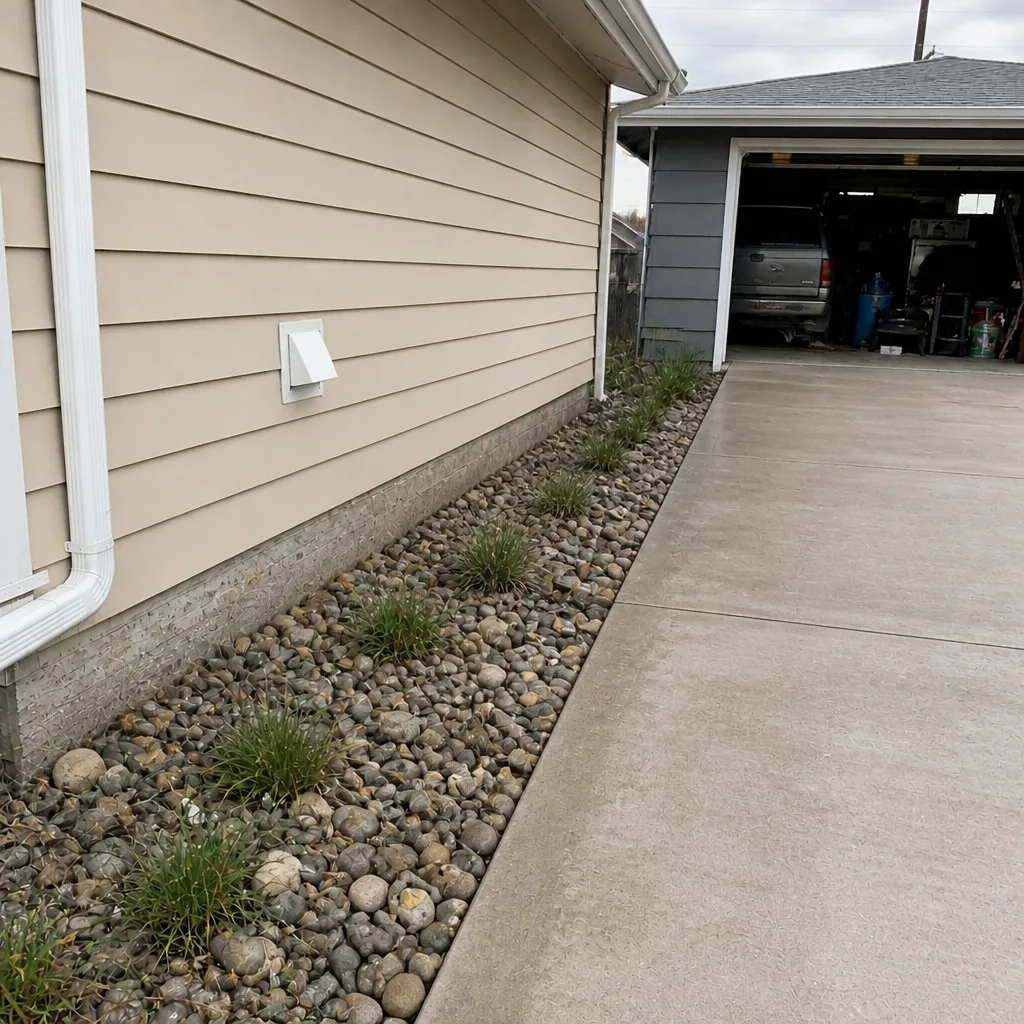
One call covers cleaning, HVAC cleaning, duct repair and sealing, and air quality sanitizing, with dryer vent cleaning as a core service as well. Dryer vents are the overlooked cousin of duct maintenance and a leading cause of residential fires, which is reason enough to add them to the same visit. You can read more about the cleaning scope on our air duct cleaning page and our HVAC cleaning page.
Common Mistakes to Avoid
- Treating a filter change as a full maintenance routine. A filter sits at one point in the system and can’t tell you about a disconnected joint or a cracked flex run. Use the register log alongside the filter.
- Waiting for a comfort complaint to act. By the time a room is visibly too cold, the leak or restriction has been there for a while. The quarterly log catches it earlier, when the fix is smaller.
- Ignoring the event trigger list. A basement finish or a pest find is an inspection point, not something to file away for the next scheduled cleaning. Respond to events when they happen.
- Hiring on price alone. A low bid that doesn’t include HEPA filtration or negative pressure tends to be a surface sweep. Ask what equipment is used before you book.
- Skipping the dryer vent. A duct-only cleaning that ignores the dryer vent leaves a fire-risk component unaddressed. Include it in the same visit.
- Cleaning without addressing leaks. A clean system with unsealed joints still loses air and still pulls contaminants in. If the log shows airflow problems, sealing is part of the fix.
- Opening the furnace cabinet to “check things.” The air handler internals and any gas or electrical components carry real risk. Observe from outside; leave the inside to a technician.
If you’re in one of Wheat Ridge’s older neighborhoods and you’re not sure whether your ductwork is original or has been added to over the years, that’s exactly the kind of thing the inspection resolves. It’s worth one visit to establish a baseline you can log against going forward.
See the difference
 Before
 After
 Before
 After
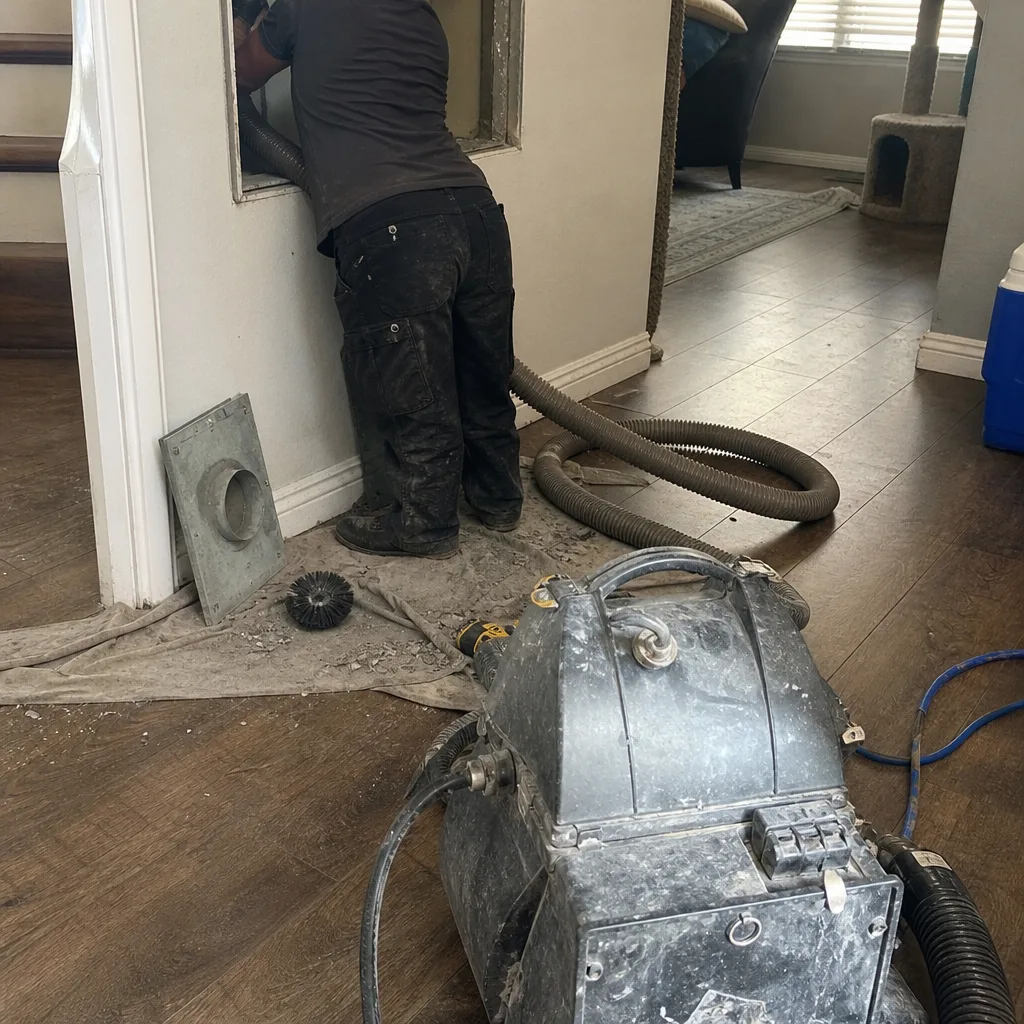 Before
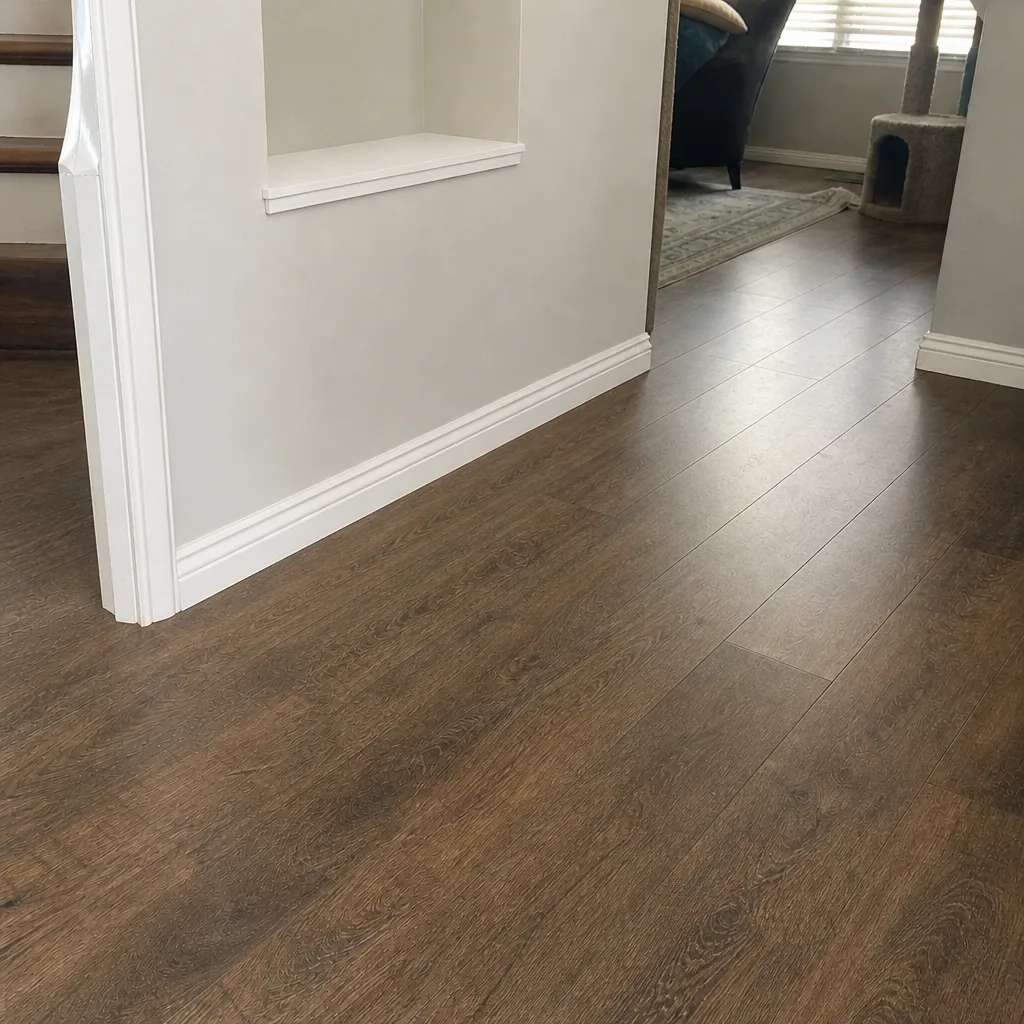 After
When to Call a Professional
Call for professional service when your register log shows a pattern you can’t explain, when a trigger event has happened and the system hasn’t been inspected since, when airflow is visibly asymmetric between rooms, or when odor or debris appears at the plenum. Also call for anything involving the air handler internals, any gas or electrical component, or ductwork you can’t safely reach. Those aren’t homeowner tasks, and treating them as such is how small issues become expensive ones. If you’re simply due for a periodic cleaning and inspection, that’s a good time to call as well. Wheat Ridge Air Duct Cleaning offers free estimates in Wheat Ridge. Call (855) 550-7950.
Frequently Asked Questions
Every three to five years is a reasonable starting point for a typical Wheat Ridge home, adjusted shorter for pets, allergies, older or mixed ductwork, or a recent renovation, pest, or smoke event. The quarterly register log is what tells you whether your interval is right for your house, so start the log before you pick a date.
No. The filter sits at one point in the system and can’t show you a disconnected joint, a cracked flex run, or a supply plenum collecting post-renovation debris, which are common findings past the filter. Use the register log and the furnace signals in this guide to catch those, and treat a fast-loading filter as a prompt to inspect rather than a diagnosis.
Schedule an inspection before the next heating or cooling season. Drywall dust, sawdust, and insulation particulate settle into the ductwork and the supply plenum, and a filter change won’t clear them. Documenting the renovation on your event timeline helps the technician target the inspection.
Not always, but often. Cleaning removes debris; sealing fixes leaks that let conditioned air out and contaminants in. If your register log shows weak airflow, a temperature gap, or dust at the air handler cabinet seams, sealing should be part of the visit. We can check both in one inspection.
A proper cleaning brings the system under negative pressure with HEPA-level filtration and uses professional mechanical cleaning equipment, not a shop vacuum or a consumer-grade tool. We use Rotobrush and Nikro for mechanical cleaning and Abatement Technologies for HEPA-level air filtration. Ask any contractor what they use before you book.
Ask for before-and-after photos of your own ducts, and ask how the system was brought under negative pressure during cleaning. Those two things separate a real job from a surface sweep. Combine that with your own register log so you can confirm the change yourself across the next quarter.
The Bottom Line
A duct system doesn’t fail on a schedule. It degrades through compounding conditions, and the conditions show up at the register, at the furnace, and around the events that disturb your home long before they show up as a service invoice. The checklist here turns that into a routine: log the registers quarterly, watch the furnace and air handler for duct stress, respond to trigger events immediately, document before you call, and pick an interval calibrated to your Wheat Ridge home rather than a generic calendar. Cleaning is the start, not the whole job. Pair it with repair and sealing, and keep the log going so your maintenance stays specific to your house.
If you’re ready for a professional inspection or a full-system cleaning, call (855) 550-7950 for a free estimate from Wheat Ridge Air Duct Cleaning. We answer 24/7. Fast dispatch from 7am to 7pm, Sunday through Friday. All work is quoted per job by the written estimate, so you’ll know the price before anything starts.
Written by the team at Wheat Ridge Air Duct Cleaning.